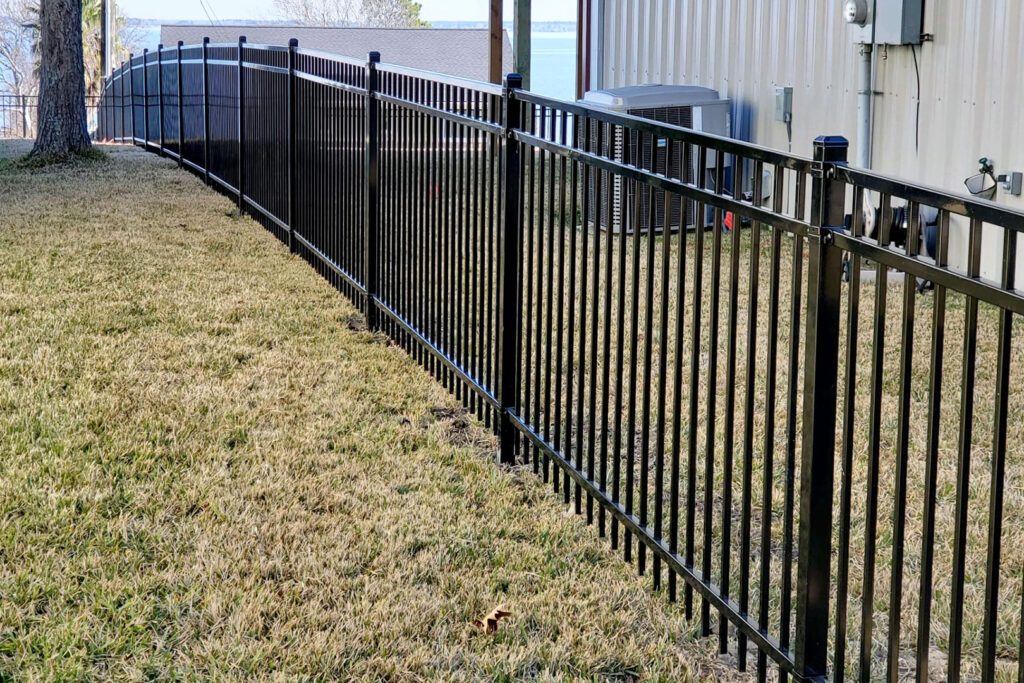
There is a particular mistake we see on lakefront lots, and it is an understandable one. Somebody fences their waterfront property the way they would fence a house in town - six-foot solid privacy fence, all the way round - and then stands in the back yard realising they have built a wall between themselves and the reason they bought the place.
Waterfront fencing is a genuinely different design problem. Here is how we approach it.
Fence the sides, open the water
Almost every good lakefront layout follows the same logic. Your privacy problem is your neighbours, and they are beside you, not in the lake. So:
- Side lines: wood privacy fence where you want to be screened from the lot next door.
- Water side: wrought iron, black vinyl-coated chain link, or wire mesh - something that contains children and dogs without blocking the view.
- Road side: whatever suits the entrance, often iron with stone columns and a proper gate.
You end up spending your budget where it actually does something, instead of ringing the whole property in the same material.
What waterfront conditions demand
Wind
A lakefront line has nothing between it and open water. A solid fence there is a sail, and it will take loads that the same fence never sees in a sheltered back yard. If you do want solid panels near the water, they need heavier posts, deeper footings, and often gaps between pickets to let air through. This is the most common reason we get called to look at a leaning fence on lake property.
Moisture
Everything near the water stays damp longer. Hardware should be galvanised or stainless without exception - ordinary fasteners will rust and streak the face of the fence within a couple of seasons. Wood should be treated or cedar, never untreated.
Slope
Lakefront lots fall towards the water, sometimes gently and sometimes not. A fence on a slope is either stepped, which leaves triangular gaps at the bottom, or racked to follow the ground, which stays tight to grade. Which one is right depends on the material and on what you are containing - a gap that does not matter aesthetically matters a great deal if you have a small dog.
Ground that moves
Soil near the water can be sandier and can shift, and erosion is a real consideration on a falling lot. Posts sometimes need to go deeper than they would further inland, and occasionally the drainage has to be addressed before the fence goes in at all.
Know where your property actually ends
This matters more on the lake than anywhere else. The land immediately around the water may be managed rather than privately owned, and what you can build on it may be restricted regardless of what your lot lines suggest. On top of that, most lake subdivisions have their own architectural rules, and they frequently address exactly this - how close to the water you can build and what it can look like.
Check your survey, your deed restrictions, and your property owners' association before finalising a design. This article walks through who to ask. It is a short conversation now and an expensive one later.
Access to the water
One detail people forget until the fence is up: how do you get to the dock? A gate on the water side needs to be somewhere you will actually use, wide enough for a mower or a cart, and built with the same corrosion-resistant hardware as everything else down there. Think about the path you take now, not the one that looks tidy on a plan.
We build throughout the lake communities, including Onalaska and Livingston. If you are working out how to fence a waterfront lot, ask us to come out - it is a much easier conversation standing on the property looking at the water.
Thinking about a fence this year?
We build across Polk County and the surrounding lake communities. Estimates are free and there is no pressure either way.
Request an estimate Call (832) 279-1295